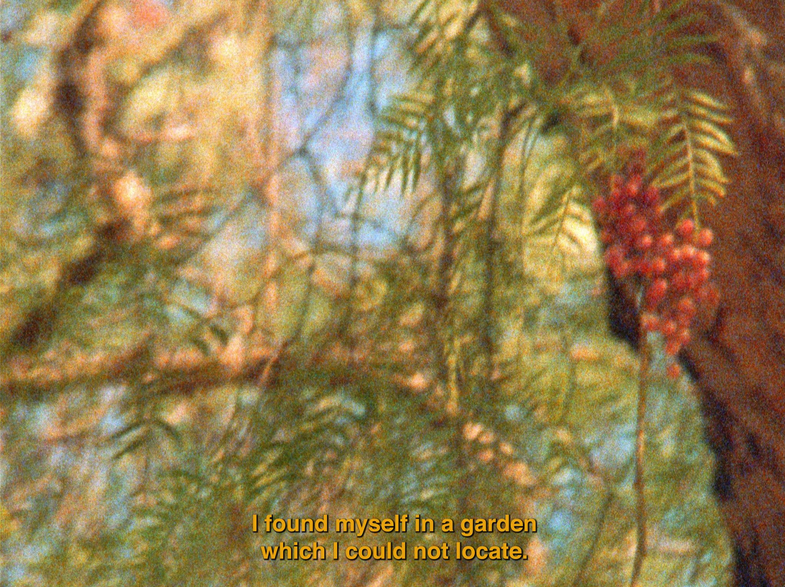
Long understood as a condensed image of society, the garden has served as a testing ground for how societies imagine their relationship to land, labor, and life itself. It is a place where ideas of care, control, belonging, and coexistence are negotiated on an intimate scale. More than a site of leisure or beauty, the garden reveals how humans and the earth shape, organize, and contest their relationship. Once imagined as an enclosed paradise or a symbol of harmony, it later became a marker of power, ownership, and political order. Today, in the present moment of ecological urgency, the garden re-emerges as a space that demands critical attention rather than nostalgia.
The films in this program approach gardening as a situated, embodied practice rather than a romantic ideal. Gardens emerge as spaces of survival, adaptation, and reconfiguration, where marginalized, postcolonial, and queer communities cultivate not only plants but alternative ways of living together. Knowledge passes between people through shared work, observation, and repeated gestures. The pace of this work allows for attention to the soil, the body, and what previous generations have learned. Yet care does not place the garden outside conflict. These films consider the garden not as a finished form, but as an ongoing process: a site where care and struggle intersect, where memory is tended, and where new social imaginaries take root. These imaginaries are fragile, provisional, yet insistently alive.
Filmprogram
The Secret Garden: A Tale in Eight Chapters (2023) by Nour Ouayda
Cruising (2024) by Nadir Sönmez
I AM A POLLINATOR! I AM A POLLINATOR! (2022) by Jort van der Laan
Film clips from The Garden (1990) by Derek Jarman
Glimpse of the Garden (1957) by Marie Menken
Gesamthof / A Lesbian Garden (2022) by Anne Reijniers & Eline De Clercq
Additional films TBA
Reading Session
Pharmacopoeia (2022) by Derek Jarman
On the Necessity of Gardening: An ABC of Art Botany and Cultivation (2021) ed. by Laurie Cluitmans (excerpts)